The short answer
A useful baby bottle test report should let a buyer identify the applicant, product, model, sample, material, test standard, test items, laboratory, dates, result, and scope. If one of these links is unclear, pause the approval and ask for clarification before using the report in marketing or purchasing decisions.
1. Identify the product and model
First check the product name, model or SKU, size, colour, component, and sample description. A report may describe a bottle body, nipple, accessory, or material sample rather than the complete feeding system.
Compare the report with the quotation, drawing, product page, and approved sample. A similar-looking image is not enough to establish identity.
2. Check the applicant and manufacturer information
Review the company name, address, applicant, manufacturer, and any brand or factory relationship shown in the document. In an OEM project, the trading company, brand owner, and production site may be different entities. Ask the supplier to explain the relationship when it is not obvious.
3. Read the sample description carefully
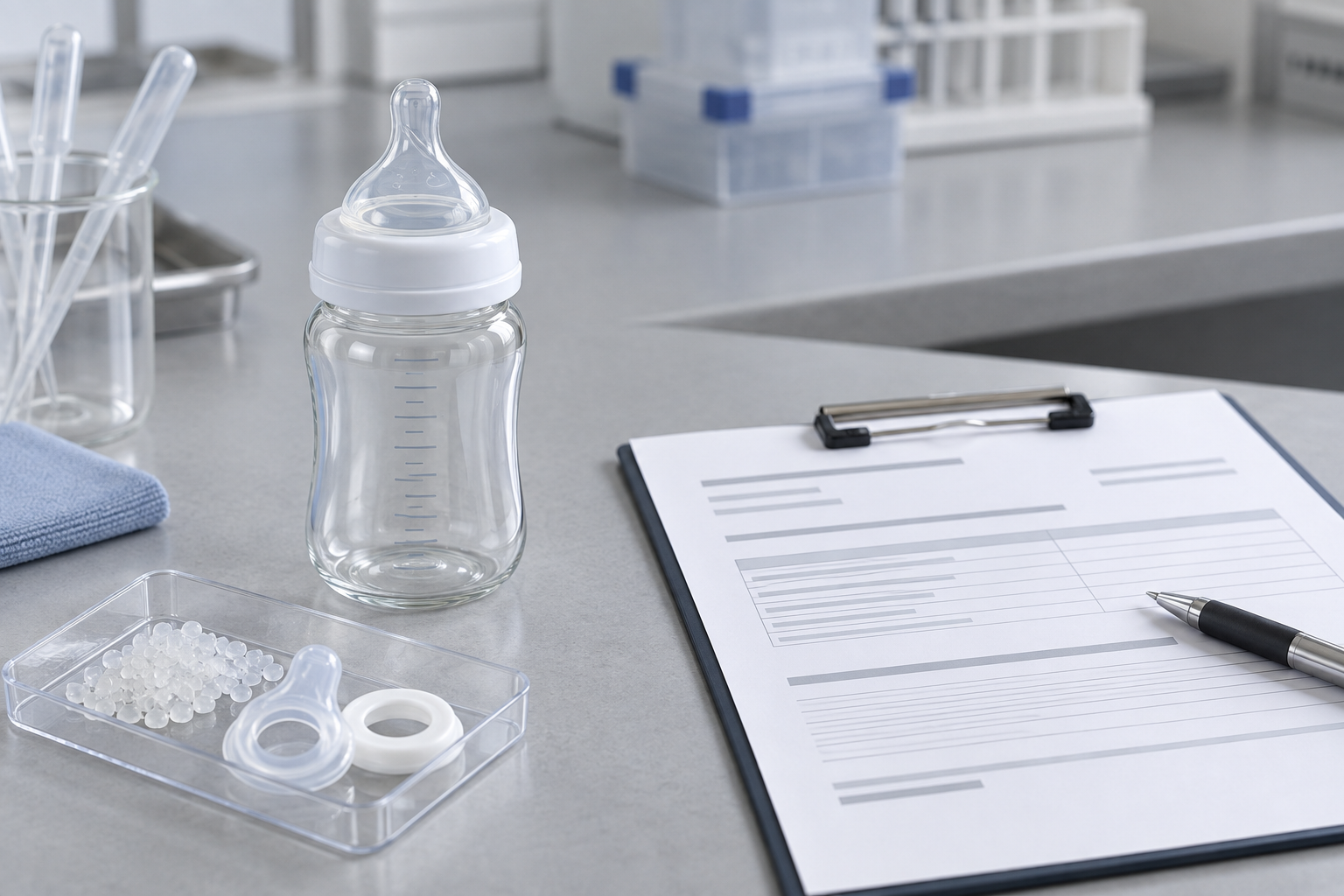
The sample section can reveal the real scope. Note the material, colour, number of samples, component tested, and any preparation or conditioning described. If the marketing claim concerns a complete bottle set but the sample is only a bottle body, the wording may be broader than the evidence.
4. Confirm the standard and test items
Do not treat a standard name as a universal approval label. Check which test items were performed and whether they relate to the intended market and claim. For food-contact products, the relevant assessment depends on the material, use conditions, market, and applicable requirements.
The FDA guidance on food-contact substances used with infant formula and human milk is useful regulatory context, but it is not a substitute for checking the actual product report and market requirements.
5. Check dates, laboratory identity, and conclusion
Record the report date and laboratory information. Ask whether the report is current for the production version. Read the conclusion and limitations, not just the first page or a logo.
The Aiduoqi materials archive includes named laboratory files for PPSU, PP, and glass baby bottle materials, along with CE/CPC-related documents. These files should be reviewed page by page against the specific model list before publication. Their filenames alone cannot prove universal coverage.
6. Build a document-to-claim matrix
Use a simple table:
| Customer-facing claim | Product/component | Supporting document | Scope confirmed? | Owner/action |
|---|---|---|---|---|
| Material statement | Bottle body | Material or FCM report | Yes / No | Confirm model |
| Market requirement | Named model | Applicable report/certificate | Yes / No | Confirm market |
| Packaging claim | Final carton | Packaging evidence | Yes / No | Review artwork |
This makes overclaiming visible. It also gives sales, quality, and marketing teams one shared reference.
Common document-review mistakes
- Treating a report for one model as a catalogue-wide certificate
- Treating a material report as proof for every component
- Confusing a laboratory test report with a government approval
- Omitting report dates or scope limitations from internal records
- Copying “certified,” “FDA approved,” or “safe” into marketing without exact support
Final takeaway
A test report is valuable when it is traceable. The buyer should be able to connect the claim to the product, component, model, sample, standard, result, and intended market. If that chain breaks, the correct action is clarification—not a stronger marketing phrase.
Frequently asked questions
Does a CE document cover all baby bottles from a supplier?
Not automatically. Confirm the product models, components, applicable requirements, and report scope.
Is an FDA test report the same as “FDA approved”?
No. Do not use that wording unless the exact legal and product context supports it. A test or food-contact document should be described accurately.
What should I ask when the model number is missing?
Ask the supplier to identify the sample, production version, component list, and matching quotation or drawing in writing.
Sources
- FDA guidance on food-contact substances for infant formula and human milk, May 8, 2019.
- FDA preparation of food contact notifications.
- Google structured data general guidelines.
Related Aiduoqi resources
For related buyer guidance, see our guide to choosing a baby bottle manufacturer, the baby bottle OEM manufacturing process, and our comparison of PPSU, PP, and glass baby bottles. If you need help reviewing documentation for a project, contact the Aiduoqi team.