Choosing the right material is one of the earliest decisions in a baby bottle development project. It affects the product’s weight, appearance, handling experience, packaging requirements, production planning, and the documents a buyer needs to review before placing a bulk order.
For private-label brands and wholesale buyers, the choice is usually between polypropylene (PP), PPSU, and glass. Each material can be suitable for a different product position. The best choice depends on the target market, bottle design, expected use, packaging plan, and compliance requirements—not on one material being universally better than the others.
PP baby bottles: a practical option for everyday product lines
Polypropylene is widely used for lightweight baby bottle designs. It can be a practical choice when a brand is developing an accessible everyday product, a travel-friendly bottle, or a larger-volume range where keeping product weight under control is important.
For OEM buyers, PP is worth considering when the project priorities include:
- lightweight handling;
- efficient packing and shipping;
- a broad range of bottle shapes and capacities;
- a competitive target cost;
- coordinated bottle, cap, collar, and accessory development.
Material selection should still be reviewed together with the complete product construction. The bottle body, nipple, sealing parts, printing, packaging, and intended market may each require different specifications or documentation.
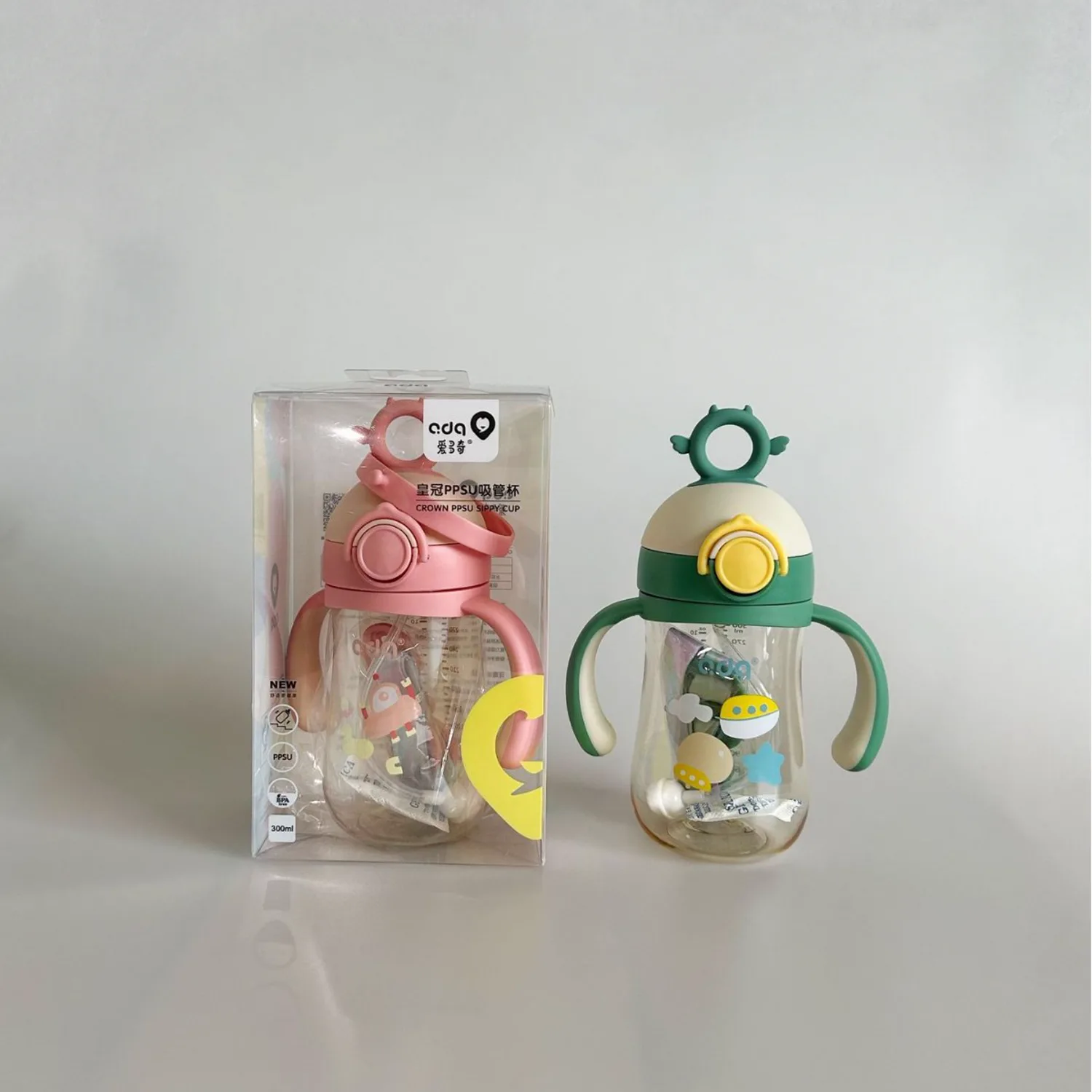
PPSU baby bottles: a premium positioning option
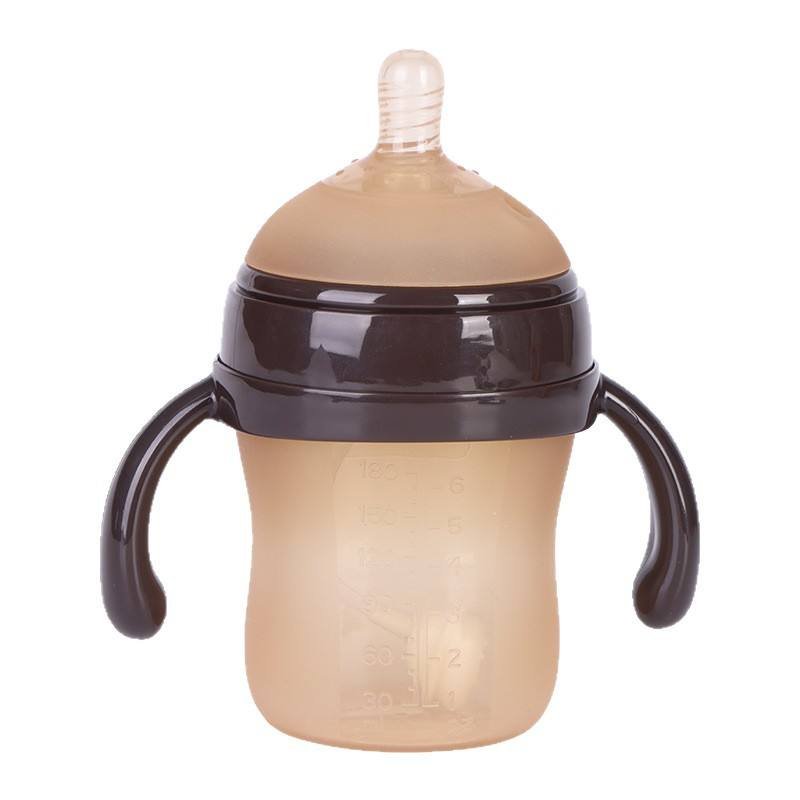
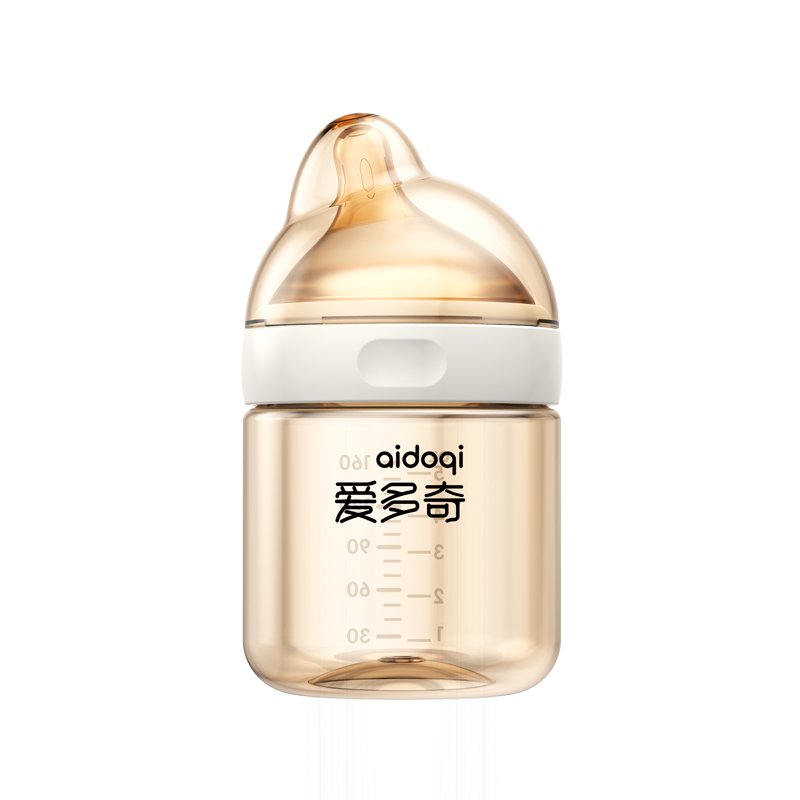
PPSU is often selected for products positioned above standard PP ranges. It is known for its warm amber appearance and is commonly used when a brand wants a more premium material story without choosing glass.
PPSU may be appropriate for an OEM project that needs:
- a premium-looking bottle line;
- a durable product concept;
- a distinctive amber material appearance;
- a coordinated range of sizes and accessories;
- clear documentation for brand and retailer review.
PPSU should not be treated as a substitute for a complete compliance review. Buyers should confirm which exact model, component, and material declaration are covered by each test report. A report for one submitted sample does not automatically prove that every product in a catalogue has identical test coverage.
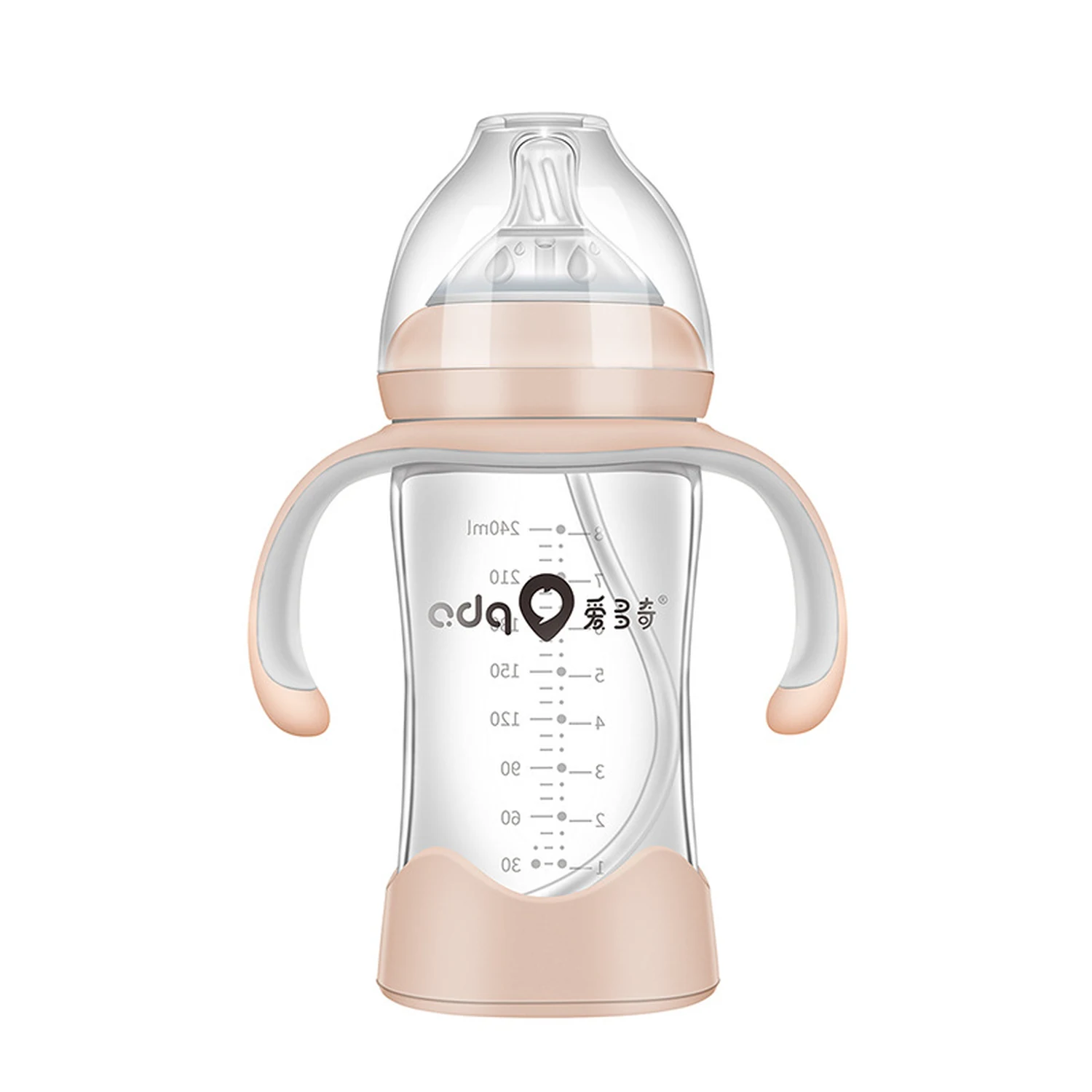
Glass baby bottles: a different weight and user experience
Glass offers a different product experience from plastic materials. It has a solid, transparent appearance and may appeal to brands that want to emphasize a traditional or premium-feeling bottle range.
The main development considerations are different from PP and PPSU:
- glass increases product weight;
- packaging needs to address breakage risk;
- protective components may affect the final product cost;
- shipping and warehouse handling need additional planning;
- the bottle, silicone parts, printing, and packaging should be reviewed as a complete system.
For a glass bottle project, buyers should ask the supplier to explain the packaging design, drop or impact-related testing where applicable, replacement policy, and how the product will be protected during export shipment.
PP vs. PPSU vs. glass: a simple OEM comparison
| Decision factor | PP | PPSU | Glass |
|---|---|---|---|
| Product positioning | Everyday and value-focused | Premium plastic range | Premium transparent range |
| Weight | Generally lightweight | Generally lightweight | Heavier |
| Appearance | Practical plastic appearance | Distinctive amber appearance | Clear and solid appearance |
| Packaging focus | Efficient packing | Premium presentation and protection | Breakage protection |
| OEM review focus | Model, components, decoration, and testing | Material declaration, model coverage, and testing | Product construction, protective packaging, and testing |
This table is a planning guide rather than a technical certification statement. The final specification should be confirmed against the exact model and destination-market requirements.
What OEM buyers should request before sampling
Before approving a sample, ask the manufacturer for a structured product information pack containing:
- Material declaration: the material used for the bottle body and each accessory.
- Model coverage: the exact item numbers covered by samples and reports.
- Dimensions and capacity: nominal capacity, bottle size, neck specification, and compatible accessories.
- Packaging details: individual packaging, inner carton, master carton, carton dimensions, and packing quantity.
- Decoration details: printing method, logo position, color references, and artwork approval process.
- Testing documents: the report number, testing organization, test scope, issue date, and applicable market.
- Quality-control checkpoints: appearance, leakage, assembly, printing, packing, and pre-shipment inspection.
This information helps a buyer compare suppliers on more than price. It also reduces the risk of approving a sample that cannot be reproduced consistently in mass production.
How to review testing and certification documents
Testing documents should be reviewed carefully. Check the following items:
- the legal company name of the manufacturer or supplier;
- the sample description and exact item number;
- the materials tested;
- the testing period and report date;
- the destination market or regulation referenced;
- whether the conclusion applies to the submitted sample only;
- whether additional models are included by a documented material or construction statement.
For example, a test report may list a tested style and additional style numbers while also explaining that the result applies to the tested sample. That wording matters. It means the buyer should confirm product equivalence and keep the relevant declaration with the project records.
Questions to ask a baby bottle manufacturer
Before moving to bulk production, ask:
- Which material do you recommend for our target price and market position, and why?
- Which exact models are covered by the available reports?
- Can you provide the material declaration for the bottle and silicone components?
- What is the minimum order quantity for custom colors, printing, and packaging?
- How do you control leakage, assembly, decoration, and carton packing during production?
- Can you provide a pre-production sample using the final materials and decoration?
- How will the bottles be protected during export shipment?
- Which specifications must be confirmed before the purchase order is issued?
Final recommendation
PP, PPSU, and glass can all serve useful roles in a baby bottle portfolio. PP is often a practical starting point for lightweight everyday ranges. PPSU can support a premium plastic product position. Glass can create a distinctive transparent product experience, but it requires more attention to weight, packaging, and handling.
The correct OEM decision is the one that matches the product brief, target market, packaging plan, and documented testing scope. Before placing a bulk order, compare the complete product system—not just the bottle material—and confirm every claim against the exact model being developed.
If you are developing a private-label baby bottle range, contact the Aiduoqi team with your target capacity, material preference, decoration requirements, packaging needs, and destination market. The supplier can then recommend suitable models and provide the information needed for the next sampling stage.
FAQ
Which material is best for an OEM baby bottle?
There is no universal best material. PP, PPSU, and glass should be compared according to the target market, price position, weight, appearance, packaging, and documented testing scope.
Are PPSU baby bottles better than PP baby bottles?
They serve different product positions. PPSU may suit a premium plastic range, while PP may be more suitable for a lightweight everyday product. The final decision depends on the complete product brief.
What should I check in a baby bottle test report?
Check the manufacturer, sample description, exact model numbers, tested materials, testing scope, report date, destination-market reference, and whether the result is limited to the submitted sample.
Can one test report cover several baby bottle models?
Sometimes a report lists additional models, but buyers should read the report wording carefully and confirm that the additional models have the same relevant materials and construction. Do not assume that one report covers an entire catalogue automatically.